

The final week of January was a whirlwind for the stock market, with tech stocks taking center stage. On Monday, the Nasdaq saw its sharpest decline in over a month following news from China about DeepSeek, a ChatGPT competitor. NVIDIA, a dominant force in AI infrastructure, faced a staggering setback, losing nearly $600 billion in market value - the largest single-day dollar loss in U.S. stock market history. DeepSeek claims to operate at a fraction of the cost of U.S. competitors, requiring less processing memory to train and run. While the long-term implications remain uncertain, this development introduces increased volatility and uncertainty in the near term.
Earnings Sensitivity
Last week also brought earnings reports from four of the Magnificent Seven, along with other key U.S. companies. So far, 77% of S&P 500 companies that have reported Q4 2024 earnings have exceeded expectations, while 63% have surpassed revenue estimates (FACTSET). Historically, positive earnings surprises have led to modest stock price increases, while negative surprises resulted in declines. However, recent quarters have shown heightened market sensitivity to earnings results. For example, IBM exceeded expectations and issued a strong outlook, leading to a 13% one-day gain. Conversely, Lockheed Martin fell 9% after reporting lower-than-expected revenue and offering cautious guidance.
Recently, S&P 500 companies that beat both sales and earnings expectations saw an average stock price gain of 3.6% post-announcement, well above the five-year average of 0.9%. Meanwhile, companies that missed estimates saw an average 5% decline, compared to the historical average of 3.1%.
Market Concentration
With the S&P 500 trading at above-average earnings multiples, investors are watching earnings reports closely. All 11 sectors of the index are expected to see earnings growth in 2024. Why does this matter? The Magnificent Seven currently make up 30% of the S&P 500’s value and accounted for 50% of the index’s gains in 2024. To sustain market growth, the remaining 493 companies will need to contribute more significantly. While the market has reached new highs over the past two years, those gains have been driven by a small group of companies. For context, the only other time such a limited number of stocks dominated performance over a two-year period was during the late-90s dot-com bubble.
This narrow market leadership presents a double-edged sword. On one hand, it raises concerns about whether a handful of companies can continue to outperform. On the other, it creates an opportunity for broader market participation, with the rest of the S&P 500 looking more attractive from a valuation and diversification perspective.
Periods of concentrated market leadership often lead to increased volatility as investors weigh sticking with what has worked - the Magnificent Seven - versus diversifying to reduce risk. The S&P 500 is currently top-heavy, with its 10 largest companies accounting for 30% of the index. January managed to post gains, but not without some turbulence. We expect market volatility to rise in 2025, compared to the relative calm of the past two years.
Last but not Least - Tariffs
Additionally, tariffs have recently moved to the forefront. While new tariffs on Mexico and Canada were announced and then delayed by a month, the U.S. moved forward with tariffs on China. The uncertainty surrounding potential tariff impacts adds another layer of market unpredictability.
In summary, markets face increasing uncertainty from new AI competition, earnings sensitivity, narrow leadership, and trade policy developments. While diversification may not have been "in style" in recent years, it remains a valuable tool for managing volatility. As always, investors should maintain a long-term perspective and avoid getting caught up in short-term market swings.
If you have questions or concerns about your individual situation, please don’t hesitate to contact us.

Are We Saving Too Much? What Three Generations Can Teach Us About Money I talk quite a bit about market strategy and investing, but I’m also meeting with clients on a regular basis and lately, I’ve started noticing something that sounds completely counterintuitive to almost everything we’re taught about money: Are we saving too much? Forget the so-called “experts” on TikTok pushing the latest scheme or telling you exactly what you should be doing with your money. These are conversations I’m having with real people every day, backed by almost 25 years of actually doing this, and I’m starting to think the answer, at least for some people, might be yes. For most of my career as an advisor, the message around money has been pretty straightforward: Save more, spend less, invest for the future…and generally speaking, that's good advice. But after working with families across multiple generations, I’m not sure it’s that simple. I now see three very different relationships with money. The older generation spent much of its life saving and, and a lot of times, now has difficulty giving itself permission to spend. The generation in the middle (mine) is in the heart of its peak earning and saving years, constantly worried about whether it’s putting enough away for retirement. And the youngest generation seems more willing to spend money today - particularly on experiences - even if that means saving less for tomorrow. So who's right? Maybe all three of them, and maybe all three can learn something from the others. The Older Generation: "We Might Need It Someday" One of the more interesting things we see as financial advisors is that turning a saver into a spender can be surprisingly difficult. Think about the habits someone develops over 40 years. Work, save, invest, don't touch the principal, repeat. Then one day they retire and we're essentially telling them "Okay. Now start spending it."That's a major psychological adjustment. I looked for data on this and here goes…Vanguard found something similar with retirement withdrawal behavior. Roughly one in four didn't touch their retirement savings at all during the five years after leaving their employer. On top of that historical market testing by Vanguard shows a retiree using the 4% rule (essentially the hypothetical idea that you never touch principal) finishes retirement with two to three times their starting wealth. Note, I’m not advocating against the 4% withdrawal rule, it’s my normal “back of napkin” discussion with pre-retirees. But, they are mathematically far more likely to die with an accidental surplus than to deplete their capital. There are perfectly rational reasons. People don't know how long they'll live. They're worried about healthcare. They want to remain in their homes. They want to leave something to their children. But there's another explanation that is harder to quantify…after spending your entire life being rewarded for saving money, spending it can feel like you're doing something wrong. And that's where financial planning can become less about maximizing a portfolio and more about giving someone permission to enjoy what they've built. The Middle Generation: "Are We Saving Enough?" Then there's the generation in the middle…under pressure and doing A LOT. They're paying mortgages, funding college, helping children get started, maybe helping aging parents. They're maximizing 401(k)s, funding IRAs, investing in brokerage accounts and constantly running retirement projections. And despite all that saving, many still don't feel like they're doing enough. For some households that worry is justified. Millions of Americans genuinely need to save more for retirement…but that's not everyone. There is another group, particularly among higher income households, that may eventually discover that the retirement problem they spent 30 years worrying about never actually materialized. This is where eventually the financial planning conversation changes from "Will I have enough?" to "What are we going to do with all of this?”. I’ve watched this firsthand many times. The Great Wealth Transfer Tells Part of the Story Cerulli Associates estimates that approximately $124 trillion of wealth will transfer through 2048, including roughly $105 trillion going to heirs and $18 trillion going to charities. Nearly $100 trillion of the total is expected to come from Baby Boomers and older generations. Obviously, leaving money to children, grandchildren or charity can be a wonderful goal. But that enormous transfer also raises an interesting question. How much of that wealth represents money intentionally accumulated for future generations…and how much represents money people simply never became comfortable spending? There's an important distinction. If your goal is to leave $2 million to your children, that's estate planning. If you end up leaving $2 million because you were afraid to take the vacations, buy the lake house, help your kids earlier or enjoy retirement despite having more than enough resources, that's something different. You may have simply oversaved. The Younger Generation: "I'd Rather Have the Experience" Then we get to Gen Z, and their approach to money can look almost backward to older generations. They seem much more willing to spend today, particularly on experiences and things they can enjoy now. Building a big investment account or accumulating “things” doesn’t always carry the same appeal. But there’s obviously another side to this. You still have to save enough to give yourself options later. Bank of America research from 2025 found that 55% of Gen Z didn’t have enough emergency savings to cover three months of expenses. Only 25% had contributed to a retirement account during the previous year, and just 21% had invested in the stock market. Their actual customer data showed Gen Z’s spending to savings ratio was 1.93, meaning average spending was nearly twice the amount held in savings. So while I think younger generations may understand something important about actually enjoying the money they earn, there’s a balance. So Who has It Right? There's nothing wrong with leaving a legacy but there is something worth thinking about if we spend the first half of our financial lives worrying about accumulating money and the second half worrying about how to give away the money we were afraid to spend. So my answer…probably none of them completely. The older generation understands security, the middle generation understands accumulation, and the younger generation may understand experiences better than either of them. The ideal financial life probably borrows something from all three. Once the math tells you you're okay, give yourself permission to use some of the money. Take the trip while you're healthy enough to enjoy it. Help your children when the money can actually change their lives rather than waiting until they're 60 to inherit it. Buy something you've always wanted. Create memories with your family. Give to organizations you care about while you're alive to see the impact. And yes, leave something behind if that's important to you. The purpose of financial planning shouldn't be to die with the largest possible account balance. It should be to use the resources you've accumulated to create the life and legacy you actually want. Maybe the real financial goal isn't maximizing wealth…it's reaching the end and realizing you saved enough for tomorrow without forgetting to live today. There’s no right answer, but my job is to manage this delicate balance and these are just some things I’ve been thinking about after thousands of conversations and decades in this business. MP

SpaceX Euphoria and Investor Perspective We don’t often field inquiries about Initial Public Offerings (IPOs) but it is hard to ignore the current hype of the upcoming SpaceX IPO. Why the euphoria? For one, SpaceX anticipates raising a record-breaking $75 billion at a valuation of $1.75 Trillion. The largest IPO in history occurred in 2019, when state-owned Saudi Aramco raised $29.4 billion. Assuming an IPO share price of $135 for SpaceX, their IPO will be 2.5 times bigger than Saudi Aramco’s. Secondly, the offering could lead to Elon Musk becoming the world’s first trillionaire. That’s not a typo, trillionaire with a “T”. As the world's most ambitious tech entrepreneur, he’s either started or been significantly involved in the following businesses: Tesla, PayPal, Twitter now “X”, Open AI -ChatGPT- and SpaceX. He’s changed the world in many ways and investors fear missing out on the next big thing. SpaceX’s IPO is just the beginning as both Open AI and Anthropic (Claude) are expected to launch their own initial public offerings, eyeing valuations close to a trillion, respectively. Each company anticipates raising significantly more than Saudi Aramco back in 2019. It is very likely we will be witnessing the three largest IPOs in history over the next 12-18 months. While SpaceX news is generating the latest headlines, numerous semiconductor and hardware stocks have “lifted off” as well. The Philadelphia Semiconductor Index (SOX) has soared nearly 80% so far this year , marking its best start to a year since its inception in 1993. In April, the index logged a 17-day consecutive winning streak, the longest in 32 years. When Nvidia’s CEO, Jensen Huang declared Marvell Technology would be “the next trillion-dollar company”, the market responded by sending the stock up 32% in a single day. Old-school hardware stock names, Dell and Hewlett Packard, are up 230%+ and 125%+ year-to-date. These impressive and “not typical” returns can easily allow you to bring down your guard as an investor but at times like this, you must also be prepared for the downside risks. A few facts to consider: At $1.77 trillion, SpaceX is being priced at roughly 92 times its annual revenue…..not earnings. 9,365%. That’s how much larger SpaceX’s projected valuation of $1.77 trillion is than its 2025 revenue. In comparison, Lineage, the largest IPO by market valuation in 2024 ($18 billion), had a valuation roughly 240% larger than its revenue. Medline, the largest IPO by market valuation in 2025 ($55 billion), completed its debut with a market value about 116% larger than its revenue. While Starlink is profitable, SpaceX as a whole is unprofitable. SpaceX posted an overall net loss of $4.9 billion for 2025, driven by the immense capital expenditures (CapEx) required for Starship and speculative orbital data centers. A historical study by Truist ( see below ) examined 30 of the most celebrated mega-IPOs in recent memory.. The standout figure? The average maximum first-year drawdown was -55%, while the median first-year return was -9%. (source: Truist Bank - Keith Lerner) Historically, many tech companies operated with extraordinary profit margins as asset-light models but the rise of artificial intelligence and cloud computing is pushing many of these companies into capital intensive, asset-heavy operations. Often, they self-funded their operations but now they are seeking financing by issuing debt. In 2025, five companies (Amazon, Alphabet, Meta, Microsoft and Oracle) alone issued over $120 billion in corporate bonds. This represented a 500% increase from 2024 . The implications of this changing landscape are yet to be known. Will the profits follow the massive spending? Another question that arises is where do the funds to participate in the IPO come from? At the individual retail investor level, it may come from cash. At the institutional level, it likely comes from the sale of other equities or various asset classes, such as Bitcoin. A darling a few years back, Bitcoin is down over 25% YTD and almost 40% lower than it was a year ago. Rebalancing funds from other equities into these IPOs could cause downward pressure on broad market index funds. SpaceX, Anthropic, and OpenAI are undeniably reshaping the future of human technology. But a revolutionary company is not automatically a sound investment at any price tag. This is not to say these companies can’t or won’t be good investments in the long-term, just that the fundamentals will eventually need to match the hype. We are not taking a stance on the worthiness of the underlying investment but you should be prepared for the expected volatility that often follows an IPO. We consistently advise investors to maintain a long-term perspective and equally important, be mindful of risk. This advice applies not only during market turbulence but also when the market’s been on a significant upswing for the last several years. Ongoing risks include high inflation and corresponding elevated interest rates, the Iran War, mid-term elections, stretched equity valuations and CapEx spending. The current risk-reward proposition suggests maintaining a diversified portfolio that fits your actual risk tolerance. The surging market and hype surrounding AI can create illusory shifts in risk tolerance, where you feel your risk tolerance is more than what it truly is. Ultimately, staying grounded in your true risk profile is the best way to capitalize on market growth without compromising your long-term financial security. As always, if you have questions or concerns about your individual situation, please don’t hesitate to contact us.

A Resilient Market…But Not a Simple One Markets have a way of reminding you how quickly sentiment can shift. What we just saw was almost textbook: a geopolitical shock, a sharp selloff, and then a rapid recovery. The kind of V-shaped move that tends to follow these events. What stood out, though, wasn’t just the pattern…it was the speed. The S&P 500 was back near highs in roughly a couple of weeks, despite war headlines and a spike in oil. For the month of April (as of April 17) we saw the S&P 500 +8.05%, DJIA +6.03% and the Nasdaq Composite +11.61%. That kind of response tells you something important: the underlying trend is still strong. A lot of the macro risk that spooked investors may have already been priced in. But - under the surface, the rally isn’t as broad as it might appear. A significant portion of the move off the lows has been driven by a handful of mega-cap names: Nvidia, Microsoft, Apple, Amazon, and Alphabet. When a small group is doing most of the heavy lifting, it raises questions about how durable the move really is. We’ve seen this dynamic before. Large-cap tech can carry the index for a while, but it’s not the healthiest foundation for a sustained rally. For this market to continue higher in a meaningful way, participation needs to expand. Interestingly, earlier this year gave us a glimpse of what a healthier setup looks like. Stock return leadership broadened out. Industrials and materials started to step up. Meanwhile, the sectors that had dominated for years - tech, communication services, lagged for a stretch. That kind of rotation is typically healthy. It shows that more parts of the market are contributing, which tends to create a stronger base. More recently, tech has taken the lead again coming out of volatility. That’s fine in the short term, but longer-term sustainability still depends on broader participation. A Market with Two Clear Narratives Right now, you can make a credible bull case and a credible bear case. On the cautious side: oil remains elevated, inflation is still lingering around 3%, and the Fed isn’t in a hurry to cut rates. Add in geopolitical uncertainty and upcoming election dynamics, and there are plenty of variables that could disrupt things. On the other hand, company fundamentals have held up better than many expected. Earnings remain solid, and the consumer, still the backbone of the economy, continues to show resilience. If you’re looking for reassurance, bank earnings have been one of the clearest signals so far. Across the 6 major banks, the message has been consistent: consumer spending is steady, credit quality remains solid, and delinquency trends are still relatively low. Financials aren’t getting a lot of attention, but they’re quietly confirming that the underlying economy is in decent shape. And as long as the consumer remains stable, that provides an important foundation for the broader market. What Could Actually Disrupt This? The biggest risk isn’t what we already know…it’s something new. What hasn’t been fully priced in is a re-acceleration, particularly in energy. Oil remains the key swing factor. We’ve seen the initial impact at the gas pump, but the bigger concern is what comes next: higher transportation costs, pressure on supply chains, and broader inflation effects that tend to show up with a lag. If oil were to move meaningfully higher, that’s when it becomes a larger economic issue and potentially forces a more complicated response from the Fed. What to do Next Importantly, investor behavior remains steady. Right now, there’s no widespread panic. Investors aren’t rushing to cash, they’re staying invested. Historically, that’s critical, especially during periods driven by geopolitical events. Some of the market’s strongest days tend to come right after its weakest ones. Matt mentioned this on CNBC's "Squawk Box" last Friday morning ( link to the clip here ). Missing even a few of those can have a meaningful impact on long-term returns. We’ve just seen another example of that dynamic play out. We simply wanted to provide our thoughts on what is happening with the markets in general. As always, if you have any questions, we’re here. Thanks for your continued support. The PAG Team

Short Term Volatility > Long Term Clarity Everyone is fully aware that over the weekend, Israel and the U.S. launched military strikes against Iran, killing senior leadership including Ayatollah Ali Khamenei. Market reactions were muted on Monday except for a spike in oil prices. With the fears of a more prolonged and spreading conflict, volatility is following suit. Concerns of increased inflation - wars are overwhelmingly inflationary due to increased government spending, resource scarcity and supply chain disruptions - add fuel to the fire. As we write this, the major indexes - the S&P 500, Dow Jones Industrial Average, and Nasdaq Composite - have all been choppy. International equity markets are reacting more negatively, as those economies are more reliant on oil from the Middle East. Oil (Brent crude) spiked 20% over the past month, with most of the increase in the last several days. The VIX volatility index moved back above 20. Energy and defensive sectors, like consumer staples and utilities, have led early in 2026, while some of last year’s high-flying tech names have cooled off. It feels like a lot. Because it is. We’re dealing with trade and tariff uncertainty, Ongoing AI valuation questions, Middle East tensions, Sticky inflation conversations. It’s not just one thing…it’s everything happening at once and that’s the backdrop where “boring” works. A Little Perspective There’s an old line from Warren Buffett that’s worth revisiting: “We simply attempt to be fearful when others are greedy and to be greedy only when others are fearful.” Moments like this test that discipline. Historically, geopolitical shocks create near-term volatility, sometimes sharp volatility. But when the underlying economy is stable, markets have typically recovered in the months that follow. In most past crises, the median return for the S&P 500 six to twelve months later has been positive. That doesn’t mean markets can’t fall further in the short run, they absolutely can. It reminds us that reacting emotionally to headlines has rarely been a winning long-term strategy. What Actually Matters for Markets The real primary driver here isn’t the headlines, it’s energy and uncertainty. If oil were to surge and stay well above $100 for a sustained period, that could meaningfully pressure inflation and interest rates. That’s something we’re watching closely. It’s also important to remember: The U.S. is now a net energy exporter, very different from the 1970s. Domestic production can ramp faster than it once could. Much of this conflict had been partially priced in as tensions built over the past month. Meanwhile, the broader U.S. economic backdrop remains reasonably solid. The labor market continues to hold up, corporate earnings have been resilient, fiscal policy still provides some tailwind and growth is steady. Our Positioning: Stay Invested, Reduce Volatility, Get Paid to Wait In this type of geopolitical climate, this is not the time to play offense. Matt said this verbatim on CNBC last week…our approach is simple: stay invested, reduce volatility, lean defensive where appropriate, and get paid to wait. Link below: https://www.cnbc.com/video/2026/02/25/take-a-defensive-posture-on-stocks-amid-geopolitical-pressures-powers-advisorys-matt-powers.html?&qsearchterm=matt%20powers We’ve already seen rotation this year toward energy, staples, and other more defensive areas. When uncertainty rises, capital tends to move toward cash flow, dividends, and real assets. Our base case for 2026: mid-single to low double digit equity returns remains intact. The conflict does not fundamentally alter our long-term outlook. We expect increased volatility until more clarity is seen with the Iran conflicts. The Bigger Picture There are always geopolitical risks…always. From wars to assassinations to financial crises, markets have faced decades of elevated tension and yet over time, they’ve continued to grind higher. Often the bigger damage comes not from the geopolitical event itself, but from an underlying economic downturn that was already forming. Scoping out, it’s possible that near-term instability leads to longer-term regional stabilization. That would come with short-term market costs, but potentially longer-term benefits. We’ll continue to assess that as events unfold. Final Thought We know volatility is uncomfortable. It’s supposed to be, it’s the price of admission for long-term returns. Our job isn’t to predict every headline. It’s to build portfolios that can navigate uncertainty…whether it’s geopolitical tension, AI disruption, inflation debates, or all of the above at once. We won’t always get every call perfectly right, but we will stay disciplined, will stay diversified, and will stay focused on long-term outcomes. As always, if you have questions, reach out. That’s what we’re here for.

How 2025 Wrapped Up, And What We’re Watching Next We hope everyone had a great New Year and is off to a productive start to 2026! Below is our outlook on the year, along with some other housekeeping items… As 2025 came to a close, markets showed a little hesitation right at the finish line. The final trading sessions were mildly lower, and we didn’t get the classic year-end “Santa Claus rally” many investors look for. But zoom out, and the bigger picture was still very positive. The S&P 500 finished the year up roughly 16%, marking its third straight year of double-digit gains. That puts this run among the stronger multi-year stretches we’ve seen in quite some time. So even though things felt choppy at the end, investors who stayed focused on fundamentals were rewarded. Tech and AI-related names drove much of the upside early, but as the year went on, participation broadened and more cyclical areas joined the rally. That’s a theme worth carrying into 2026. Summarizing 2025 is easy: Markets delivered strong returns, earnings held up, and the economy avoided the slowdown many feared. The more interesting question looking ahead is this: Can the market repeat it, and what actually has to change under the surface for that to happen? History tells us markets can keep going, but rarely in the same way. That idea shapes how we’re thinking about the year ahead. Theme #1: Returns Likely Moderate and That’s Normal After several strong years, moderation is often the next phase. A few reminders from history: We’ve had a bull market in every decade for the past 100 years Nearly half of bull markets make it into a fourth year Fewer than 40% post strong gains in that fourth year Pullbacks of 10–15% are common even in healthy bull markets In other words, slower returns and occasional drawdowns are often the cost of extending a bull market. For 2026, returns are likely to be more earned, more selective, and more dependent on fundamentals and not broad multiple expansion. Theme #2: Leadership Will Change Leadership is how bull markets survive. Historically, about three-quarters of bull markets see leadership shift after the first three years. That shift usually extends the cycle rather than ending it. We’re seeing signs of that already: More sectors gaining traction Less reliance on a small group of mega-cap names Improving participation across healthcare, industrials, materials, and other cyclical areas This kind of rotation is healthy. It refreshes the market and creates new opportunities beyond the higher valuation areas. Theme #3: Volatility Picks Up As market transition phases, volatility usually follows. Why? Valuations are higher, leaving less room for disappointment Policy headlines and macro noise aren’t going away Expectations reset, which leads to sharper short-term swings Two additional factors matter in 2026: Midterm elections . Historically, midterm election years tend to bring more volatility as markets price in uncertainty around fiscal policy, taxes, regulation, and government spending. While outcomes often resolve positively over time, the path there is rarely smooth. High earnings expectations. When expectations are elevated, even “good” results can lead to pullbacks if companies miss slightly or guide conservatively. What Still Supports a Constructive 2026 Even with moderation and volatility, the foundation is still solid: Earnings remain the anchor Participation continues to broaden Rate pressure is no longer tightening - the Fed is now more of a tailwind than a headwind Margins and profitability are improving, helped by productivity gains The Economy: Slowing, Not Stalling Economic data in 2025 quietly surprised to the upside. Growth held up even as the labor market cooled. Unemployment levels moved higher but remained consistent with a slowing economy and not one of the verge of recession. The biggest story was and still is productivity. Companies continued to grow profits even as hiring slowed. That productivity backdrop helped support margins and earnings and is a key reason the economic foundation remains intact. The argument can be made that this is the AI effect. Where AI Fits Now AI is still a major investment theme, but the market’s focus is evolving. Capital spending topped $400 billion in 2025 and could approach $600 billion next year, largely tied to infrastructure and data centers. The shift now is this: The market is less interested in who is spending and more interested in who is benefiting. Moving from builders to adopters, simply companies that can translate AI investment into productivity, margin expansion, and real earnings growth. Venezuela We’re all aware of the capture of Venezuelan President Nicolas Maduro…an event that has broad geopolitical ramifications. Venezuela currently has the largest proven oil reserves in the world. The practical reality is that Venezuela currently produces a fraction of its potential because of years of underinvestment, sanctions, and infrastructure decay. Bringing production back online will take billions of dollars and years of work, it’s not an overnight fix or like turning on a faucet. Near term, expect some choppiness in oil as headlines drive volatility. Longer term, if Venezuelan production actually makes it back into global markets, it could shift supply and benefit U.S. energy players. Either way, geopolitics stays part of the backdrop for both commodities and equities. Retirement Contribution Limits Have Changed 401(k), 403(b), and most 457(b) plans: Contribution limit rises to $24,500 in 2026 (up from $23,500). IRA (Traditional & Roth): Annual contribution limit increases to $7,500 (up from $7,000). Catch-up contributions (age 50+): Up to $8,600 (up from $8,000). “Super” catch-up (ages 60–63): Up to $11,250 if your plan allows. We look forward to a great 2026 and navigating the year together. As always, don't hesitate to reach out if you have any questions or concerns.

The Hidden Risk of Market Concentration Why remembering market history matters when enthusiasm runs high Markets have a way of convincing us that what’s working now will keep working forever, until they remind us otherwise. Every decade tells a story about what investors value most. In the 1960s and 1970s, the world’s largest companies were industrial and oil powerhouses like IBM and General Motors. Manufacturing defined the economy, and scale was the ultimate advantage. IBM’s market value, roughly $75 billion in the mid-1960s, made it a symbol of innovation and stability with unimaginable in size at the time. By the 1990s, the digital revolution had arrived. Microsoft, Intel, and Cisco defined a new era of growth and optimism. At its 2000 peak, Cisco traded near 200x earnings and briefly became the world’s most valuable company...before losing more than 80% of its value when the dot-com bubble burst. The 2000s brought a return to tangible assets. Oil prices soared above $140 a barrel, and ExxonMobil topped global rankings. Yet, quietly, Apple, Amazon, and Google were building the platforms that would dominate the next decade. By the 2010s, technology wasn’t just a sector, it was the market. Apple became the first trillion-dollar company in 2018, and the top five U.S. tech firms...Apple, Microsoft, Amazon, Alphabet, and Meta made up nearly 20% of the S&P 500 by decade’s end. Now, in 2025, we’ve entered the AI era. Nvidia, once a niche chipmaker, has become the world’s most valuable company at roughly $4.5 trillion, with Microsoft and Apple close behind near $3.9 trillion each. The top 10 companies now account for more than one-third of the entire S&P 500’s value, the highest level of concentration in over 60 years. The innovation behind this is real - but so is the froth. We’re seeing valuations stretch well beyond long-term averages, fueled by enthusiasm that assumes growth will continue indefinitely. It’s an exciting story, but history reminds us that even the best companies can become over-owned and overvalued when optimism runs unchecked - and - you probably already own more big tech than you think. We’ve had a lot of conversations lately about companies like Nvidia, Microsoft, and Broadcom which are the names driving much of this year’s market performance. They’ve been incredible performers, and it’s easy to look at the headlines and wonder if you should be adding more. But here’s what surprises most investors: if you own index funds or large-cap mutual funds, you already own them - and quite a bit of them. That’s because most indexes are weighted by size, which means the biggest companies make up the biggest portion of your portfolio. The S&P 500 isn’t divided evenly across 500 companies. The top 10 names led by Nvidia, Apple, and Microsoft now account for more than one-third of the entire index. Nvidia alone recently represents over 8% of the S&P 500, contributing an outsized share of this year’s returns. So while you might feel diversified across hundreds of holdings, much of your return is really being driven by a handful of companies. That’s what we mean by concentration. None of this is necessarily bad. These are strong, profitable, innovative companies that have earned their place. But it’s worth remembering that market leadership always changes. The same pattern has repeated for decades...industrials to oil, oil to software, software to platforms, and now platforms to AI. Every era has its giants, and every cycle brings new ones. That’s why we stay focused on balance. We want your portfolio to participate in the growth of today’s leaders, but not become dependent on them. It’s easy to think, “I don’t own Nvidia,” when in reality, you likely do - through your S&P 500 fund, total market fund, or large-cap growth fund. We're not saying avoid these names or overhaul your strategy. This is just a simple reminder to recognize that even broad market exposure today comes with a lot of concentration in a few big winners and to make sure your portfolio stays diversified enough for whatever comes next. So when you see Nvidia or Microsoft dominating the headlines, know that you’re probably already along for the ride. Keep perspective, stay disciplined, and remember that markets always change faster than we expect.
Markets Are Up - Even If the Headlines Don’t Feel That Way It’s been really easy to miss since it happened so fast, but our job is to keep you in the loop. Over the last few months, the U.S. stock market demonstrated remarkable resilience as it rebounded sharply from the tariff driven lows in April to setting fresh record highs for the S&P 500 the last few trading days. Climbing more than 20% from its recent bottom, the rally has surprised many investors and once again highlighted the market's ability to recover, even when there is plenty in the news to give you pause. While markets can be prone to irrational swings in the short run, over time, they often reflect broader economic trends. Right now, investors seem to be looking past daily headlines and focusing instead on longer-term drivers: the AI transformation, central bank support, gradual progress on trade, and a generally stable global economic outlook. So far, the only formal trade agreement signed this year has been with the U.K., one of America’s strongest allies. An important step, but a limited one. With the broader trade picture still evolving and a July 9th tariff deadline hanging in the background, trade policy remains a wildcard that could reintroduce volatility. On top of that, economic data is mixed. First-quarter GDP showed contraction, consumer spending has been uneven, and the federal deficit continues to grow. Moody’s recent downgrade of U.S. government debt added to the concern, raising the potential for higher borrowing costs for US taxpayers. Additionally, tensions in the Middle East, particularly the escalation between Israel and Iran, create more geopolitical risk. Still, investors have largely stayed the course. Bond markets, unlike in 2022, are doing their part to stabilize portfolios. International equities have awakened from their decade-long slumber and are showing signs of leadership, suggesting that investors are beginning to look more globally for opportunities. As we all know, markets don’t move in a straight line, and plenty of risks remain. But this recent rally is a useful reminder: staying invested, especially during periods of uncertainty, often proves to be the right call. Maintaining a long-term perspective, diversifying across asset classes, and resisting the urge to react emotionally remain cornerstones of investing. Stay invested, even when it doesn’t “feel good” in the moment. Here's why... If you invested $10,000 in the S&P 500 from 2005 to 2024, you would’ve returned over 10% per year. But if you missed the best 10 days, your return would have averaged 6.1% annually. Six of the seven best days for the S&P 500, over that 20-year period, occurred after one of the worst 10 days. That is truly the power of staying invested. As always, if you have questions or concerns about your individual situation, please don’t hesitate to contact us.
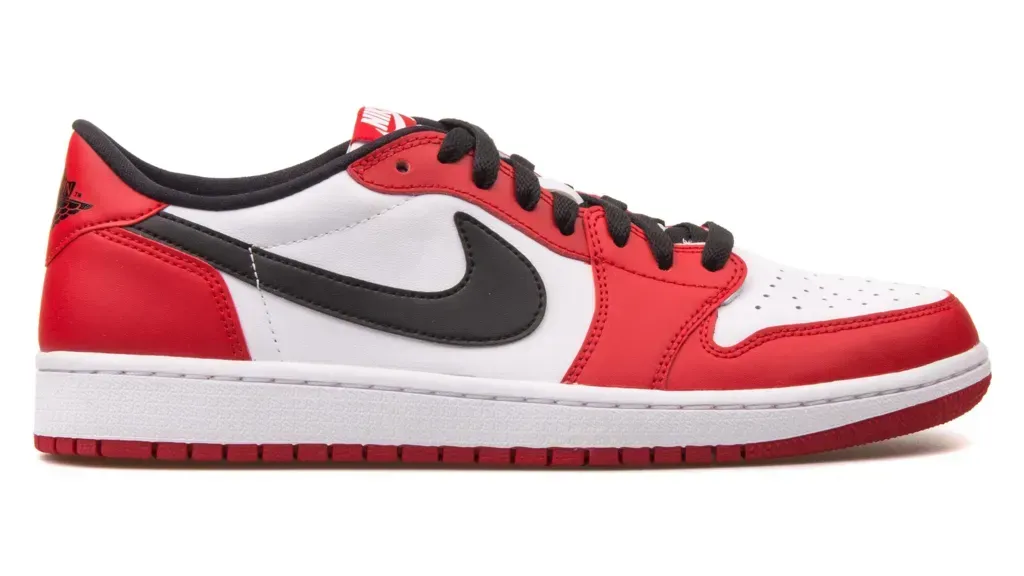
Below is a link to a recent BBC article - that we had the honor of being interviewed for - with commentary from us on what the tariffs could mean to Nike and the footwear industry: BBC - Nike and Tariffs

What a Week: Let’s Unpack It It’s been a roller coaster in the markets this week - sharp declines, sharp rebounds, and a fair bit of investor whiplash. But amid the headlines and volatility, there are a few key themes worth highlighting. Equity Markets The biggest jolt came midweek when markets staged a strong bounce on Wednesday. What changed? President Trump announced a 90-day pause on proposed tariffs, easing tensions and giving the market a breather. That news helped shift sentiment, and we saw equities snap back after several tough sessions. This week, the S&P 500 surged over 9%. However, since the tariff announcement after market close on April 2nd, the index remains down more than 5%. Bond Market On the fixed income side, the bond market is telling its own story. The 10-year Treasury yield has been rising, signaling renewed expectations around inflation, future Fed moves, or simply a re-pricing of risk. For investors with balanced portfolios, this matters - rising yields affect not just bonds, but also equity valuations and borrowing costs. Volatility Finally, it’s worth remembering that volatility, while uncomfortable, has often paved the way for strong market recoveries. Historically, when the CBOE Volatility Index ’VIX’ (which simply shows how concerned investors are about the stock market going up and down in the near future) spikes above 40, a level it hit earlier this week, the S&P 500 has averaged a 30% gain over the following 12 months, with a 95% likelihood of a positive return. The VIX reached as high as 60 midweek before pulling back to around 44 by early Friday. While past performance doesn’t guarantee future results, it does offer helpful perspective during turbulent times. Keeping Perspective At times like these, it’s important to remember that market volatility is not unusual and it’s part of the investing. As always, we’re keeping a pulse on the market, keeping our long-term view in mind while watching for short-term shifts. If the recent swings have raised questions or you’d just like to talk through your portfolio, we’re here. Don’t hesitate to reach out. Sometimes a quick conversation can go a long way in bringing clarity and confidence. We also know this kind of market movement can feel unsettling - and you're not alone in that. Just know that we’re here for you, and we’re always ready to talk things through whenever you need.

Markets Took a Hit Yesterday and They're Still Sliding Today. Here's What to Know. The markets had a tough day yesterday and unfortunately, the selling hasn’t let up much today either. To recap: on Thursday, the Dow fell about 1,500 points (roughly 3.5%), while the S&P 500 and Nasdaq were down 4% and 5%, respectively. The Russell 2000, which tracks smaller companies, dropped nearly 6% and officially dipped into bear market territory. Today, markets are still under pressure as investors digest the impact of what sparked all this: a sweeping new round of tariffs announced by President Trump. What’s Going On? President Trump rolled out a plan to impose “reciprocal tariffs” on imports from over 180 countries. The goal, according to the administration, is to level the playing field claiming that many countries charge the U.S. more to import goods than we charge them. Here’s the short version: A 10% baseline tariff applies broadly, but many countries are facing much higher rates. China is now subject to a 54% total tariff when you include previous rounds. The EU is hit with a 20% tariff, Japan 24%, India 26%, and Vietnam tops the list at 46%. Others, like the U.K., Brazil, Singapore, and Australia, are seeing the baseline 10%. The market wasn’t expecting anything this aggressive, and the sharp reaction reflects concerns about rising costs, slower global trade, and the potential for an economic slowdown. Who’s Getting Hit the Hardest? Some sectors and companies are feeling the pain more than others: Retailers that rely on cheap imports saw massive drops Big international players like Apple fell hard as well, even if their direct exposure to tariffs is limited. Tech in general is having a rough stretch, as it usually does during high-volatility periods. Smaller companies, especially those more exposed to cost swings, were heavily sold off. That said, not everything was red: Real estate investment trusts (REITs) held up better than most. With bond yields falling, some investors shifted into interest rate–sensitive sectors like real estate. International companies with minimal exposure to the U.S. weathered the storm relatively well. Fixed income has held up relatively well considering a drop in the 10-year treasury rate touching 4%. What Happens Next? That’s the big question and part of the reason markets are still sliding today. There’s a lot of uncertainty around how long these tariffs will last, whether other countries will retaliate (China already has with a 34% tariff announced today) and how all of this plays into inflation, interest rates, and the broader economy. Bottom line: we’re in wait-and-see mode, and markets don’t love uncertainty. What Should Investors Do? Here’s our advice: don’t panic. Sharp drops like this can be unsettling, but they’re not unusual and reacting emotionally usually does more harm than good. During times like this, it can be difficult to see through the uncertainty. Something to keep in mind….Since 1975, the 50 best stock market days were preceded by an average market decline of 6.7% over one month and 10.2% over two months. If you’re a long-term investor, days like these are part of the journey. And if you’ve got cash on the sidelines, there may be some solid buying opportunities emerging. And if you’re unsure what your next move should be? That’s okay, too. Sometimes the smartest play is to sit tight, stay diversified, and not let short-term noise throw you off your long-term plan. As always, if you want to talk through what’s going on or explore any opportunities, we’re just a call or message away.